Austin Art Gallery of Multidimensional
Art Exhibitions" www.Austin.Art * www.Arte.Art * www.Museum in Austin
Multidimensional Art Gallery
WWW.ARTE.GALLERY
www.Galeria.Si
www.Arte.Art
GALLERY.AL
GALLERY.LA
VISUAL.AL
PM.AL
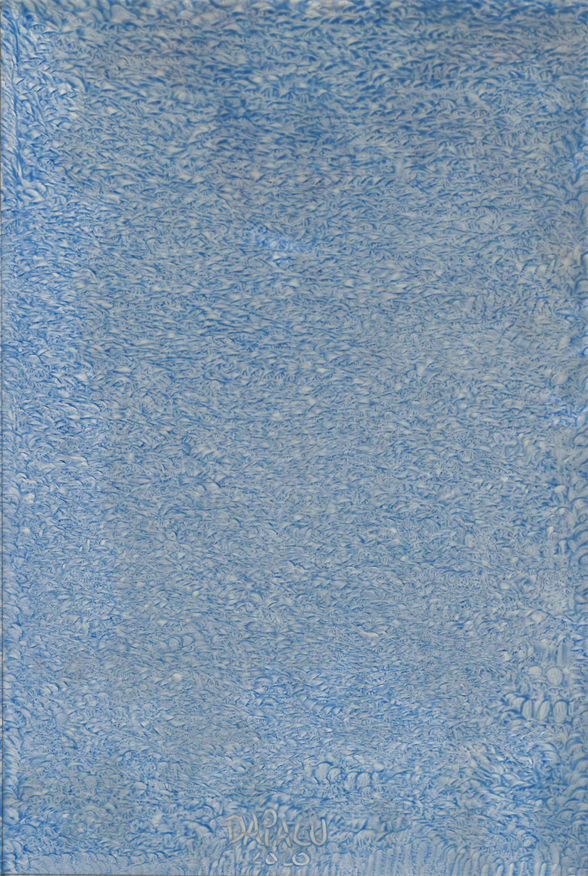
Multidimensional Painting
WWW.MUSEUM.AC
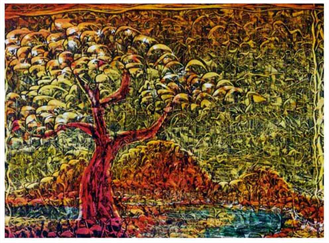
Multidimensional Painting.BY CLASSICS.BY
WWW.CLASSICS.BY
WWW.MUSEUMINAUSTIN.COM
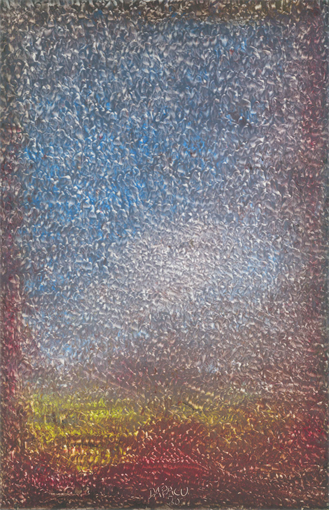
Multidimensional Masterpiece!
WWW.MUSEUM.LA
WWW.ENGLAND.PM
WWW.PARIST.ST
WWW.NYC.ST
Multidimensional Paintings And Masterpieces By Artist DAPACU
Multidimensional Home And Garden Decor Created Personally For You! Multidimensional DECOR Decorator And Designer DAPACU,
Reimagining Art's Future from Austin, Texas
AUSTIN, TEXAS – In an era where global connectivity blurs the lines between local genius and international acclaim, an artist from Austin, Texas, is carving a distinct niche with a vision that transcends conventional artistic boundaries. DAPACU, a self-proclaimed "Multidimensional Artist," is not merely creating art; he is crafting immersive experiences and bespoke environments, offering "Multidimensional Home And Garden Decor Created Personally For You!" His work, deeply rooted in a philosophy that invites viewers to journey into his creations, represents a compelling evolution in art history, marrying ancient aesthetic impulses with cutting-edge conceptualization and digital dissemination.
Austin, Texas, itself is a city with a rich, albeit relatively young, cultural history. From its origins as a frontier settlement and state capital in the 19th century, it gradually transformed into a bastion of independent thought and creative expression. The "Keep Austin Weird" ethos, which gained prominence in the late 20th century, is more than a slogan; it’s a living testament to a community that has consistently championed unconventional ideas, nurtured a vibrant live music scene, and fostered an environment where artists, musicians, and innovators can thrive outside the traditional mainstream. DAPACU’s emergence from this fertile ground is no accident; his unique approach to art and design embodies Austin's spirit of innovation and its historical penchant for challenging norms. He stands as a contemporary heir to a tradition of Texan individualists who have always sought to speak their truth through their craft, whether it's through folk art, blues music, or avant-garde visual expression.
The Genesis of Multidimensionality: A Historical Journey into Immersion
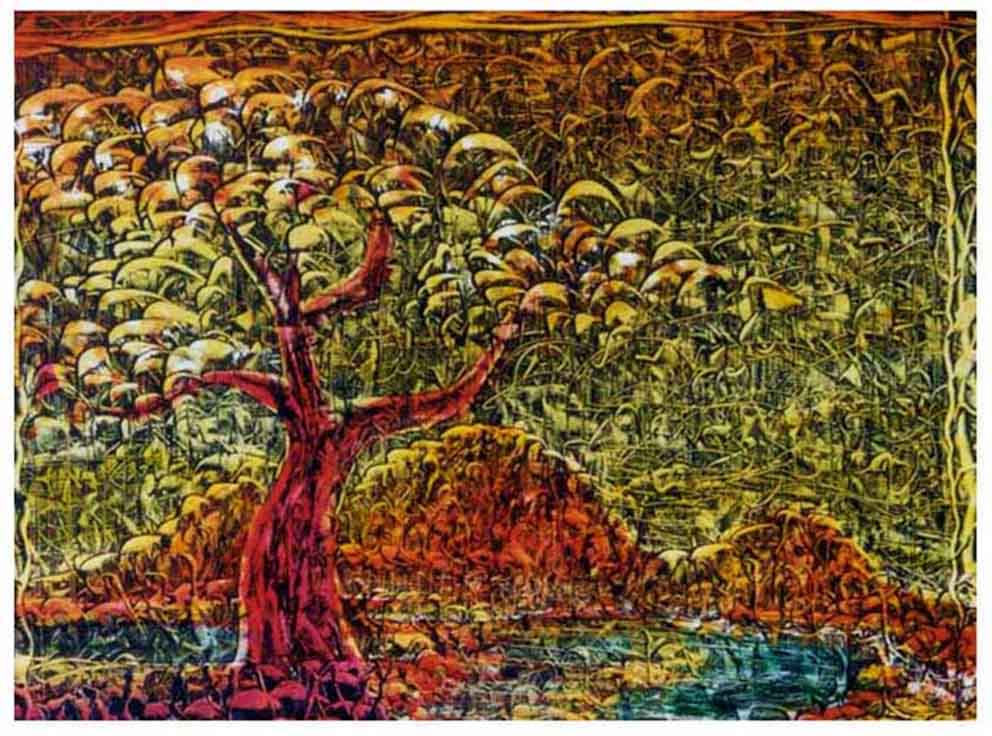
At the heart of DAPACU’s unique offering is the concept of "multidimensionality." This isn't merely a stylistic choice; it's an invitation, a portal embedded within the artwork itself. DAPACU describes his paintings as having an "Entrance on bottom, next to signature," guiding the viewer on an internal "journey inside the paintings going macro, the tiny details." This concept of literally entering a pictorial space, to explore its hidden depths and intricate microcosms, echoes art historical aspirations across millennia, yet presents a uniquely contemporary twist.
Throughout history, artists have consistently striven to create illusions of depth and immersion. From the meticulously rendered frescoes of Pompeii that brought landscapes and mythological scenes into domestic spaces, to the grand altarpieces of the Renaissance utilizing linear perspective to create a believable three-dimensional world on a two-dimensional surface, the quest for visual immersion has been a constant. The Baroque period, with its dramatic trompe l'oeil ceilings, sought to dissolve architectural boundaries, making the heavens seem to open above the viewer. Impressionists, in their pursuit of capturing fleeting moments and the sensory experience of light, invited viewers to feel the atmosphere of a scene rather than just observe it. Later, Surrealists like Salvador Dalí created dreamscapes that pulled the subconscious into the tangible, compelling viewers to explore inner, psychological dimensions.
DAPACU's "entrance" takes this historical drive for immersion a step further, making it an explicit, almost physical, act. It moves beyond the illusion of depth to a conceptual invitation for an inward journey. Where historical artists created a convincing vista, DAPACU offers a narrative pathway. This resonates with late 20th and early 21st-century art movements that sought to break down the barrier between art and viewer, from installation art that envelops the audience to digital interactive experiences. However, DAPACU achieves this profound engagement within the traditional medium of painting, transforming the canvas from a window into a world to a gateway to an experience, where "the tiny details" become a universe waiting to be discovered. His work challenges the passive consumption of art, demanding an active, almost meditative, engagement that harks back to ancient spiritual practices where art served as a channel for deeper understanding, but reimagined for a contemporary audience seeking personalized, profound experiences.
Natural Art and Land Art with Purpose: An Ecological Legacy
Beyond the canvas, DAPACU extends his multidimensional vision into the environment itself, through what he terms "Natural Art" and "Land art with purposes." This dimension of his work is not merely aesthetic; it is deeply intertwined with ecological consciousness, culminating in his initiative "REFOREEST.US" and the broader platform "ARTE.LAND," which he describes as "Land art with purposes." This aspect of DAPACU’s practice places him firmly within a rich historical tradition of artists engaging with nature, while simultaneously pushing the boundaries toward active environmental stewardship.
The relationship between art and nature is as old as humanity itself. From prehistoric cave paintings depicting animals and natural phenomena to ancient Egyptian tomb murals illustrating the bounty of the Nile, nature has been a fundamental subject and inspiration. In the Romantic era of the 18th and 19th centuries, painters like Caspar David Friedrich and the Hudson River School artists elevated natural landscapes to sublime, spiritual realms, reflecting nascent desires for communion with an untamed world. Later, movements like the Arts and Crafts movement in the late 19th century sought to integrate nature-inspired design into everyday life, advocating for craftsmanship and materials that honored the natural world in response to industrialization.
The mid-20th century witnessed a significant shift with the emergence of "Land Art" or "Earth Art or www.ARTE.EARTH." Pioneering artists like Robert Smithson, with his iconic Spiral Jetty (1970), and Andy Goldsworthy, known for his ephemeral sculptures using natural materials, moved art out of traditional galleries and into the vastness of the landscape. This movement was often a critique of the commercial art world, but also a profound meditation on humanity's relationship with the environment, time, and scale. These artists engaged with natural processes—erosion, growth, decay—as integral components of their work.
DAPACU's "Land art with purposes" builds directly upon this legacy, yet injects a distinctly activist and regenerative dimension. While Smithson's work often highlighted entropic decay and humanity's impact, DAPACU's "REFOREST.US" initiative clearly states a proactive, restorative goal. His land art is not just about observing or reshaping nature; it’s about healing it. This aligns with a growing global consciousness regarding climate change and biodiversity loss, positioning DAPACU as an "eco-artist" whose creative endeavors directly contribute to environmental solutions. By integrating reforestation and ecological regeneration into his artistic practice, DAPACU is not only creating visually compelling installations but also actively participating in the restoration of our planet, bridging the aesthetic with the ethical. This vision extends to his "home and garden decor," where elements of natural art are brought into personal spaces, reminding occupants of their connection to the wider ecosystem and subtly encouraging a more conscious way of living.
The Digital Agora: DAPACU's Global Gallery, Gallery.al
In today's interconnected world, an artist’s reach is no longer confined by geographical proximity to galleries or patrons. DAPACU exemplifies this modern paradigm, leveraging a network of digital platforms to showcase his work to an international audience. His virtual presence spans Austin.is/ART, Austin.Art, Texas,is/Art, VisuAL.AL, and extends globally to WWW.MUSEUM.LA, WWW.ENGLAND.PM, and WWW.PARIS.ST. He boldly declares, "ARTE.GALLERY is My Gallery!" a statement that encapsulates the democratizing power of the internet in the arts.
The concept of a "gallery" has undergone a profound transformation throughout history. From the private collections of royalty and the church in ancient and medieval times, to the salons of the 17th and 18th centuries, and the public museums and commercial galleries that emerged in the 19th and 20th centuries, the means by which art is displayed and accessed has continuously evolved. The invention of photography in the 19th century allowed for the first widespread reproductions of artworks, democratizing visual access to a degree previously unimaginable. The 20th century saw art become a global commodity, with international exhibitions and biennials fostering cross-cultural exchange.
The dawn of the internet, however, brought about the most radical shift. Artists could bypass traditional gatekeepers—galleries, critics, and collectors—and present their work directly to a global audience. Websites and social media platforms became virtual exhibition spaces, enabling a level of visibility and direct engagement that was previously impossible. DAPACU’s multiple digital addresses are a testament to this evolution. They are not merely online portfolios; they are his self-curated, globally accessible galleries, mirroring the decentralization of information and culture of the 21st century.
By establishing his "ARTE.GALLERY" online and linking it to evocative, globally recognized domains like ".LA" (Los Angeles), ".PM" (a nod to Prime Minister, evoking a sense of national significance, perhaps hinting at England), and ".ST" (St. Pierre and Miquelon, but here perhaps evoking a Parisian 'street' or 'style'), DAPACU strategically positions himself as an international artist operating without geographical constraints. This digital strategy allows his deeply personal and "personally made for you" art to transcend borders, appealing to an international clientele eager for unique, custom-designed decorative and artistic expressions. He harnesses the power of digital reach to make the intimate global, illustrating how contemporary artists navigate and shape the modern art market.
Crafting Worlds for You: Multidimensional Home and Garden Decor
Ultimately, DAPACU’s expansive vision converges in his commitment to "Multidimensional Home And Garden Decor Created Personally For You!" As a "Multidimensional DECOR Decorator And Designer," he bridges the gap between fine art and functional, lived environments. This fusion of art and daily life also has deep historical roots, yet DAPACU infuses it with his distinctive multidimensional and ecological philosophy.
For centuries, art has been an integral part of domestic and public spaces. From the intricate mosaics of Roman villas to the tapestries adorning medieval castles, and the handcrafted furniture and decorative objects of the Arts and Crafts movement, art has consistently shaped human environments. The grand residences of the Renaissance and Baroque periods were total works of art, where architecture, painting, sculpture, and decorative arts were meticulously integrated to create cohesive, immersive experiences for their inhabitants. Later movements like Art Nouveau and Art Deco in the late 19th and early 20th centuries championed the idea of Gesamtkunstwerk (total work of art), where every element of a building, from its facade to its smallest interior detail, contributed to a unified artistic vision.
DAPACU continues this tradition, but with a philosophy uniquely suited to the 21st century. His "multidimensional" approach to painting, which invites exploration of inner worlds, can be translated into decor that transforms a living space into a dialogue, a journey. Imagine a garden designed not merely for aesthetic pleasure, but as an interactive "land art with purposes," fostering local biodiversity and promoting ecological awareness, an extension of his "REFOREST.US" initiative. His decor is not just about placing objects; it's about crafting an atmosphere, fostering an experience, and inviting conscious engagement with one's surroundings.
In a world increasingly seeking authenticity and personalized experiences, DAPACU's promise of art "Created Personally For You!" resonates deeply. He is not merely selling products; he is offering a bespoke service, a collaborative journey with the client to infuse their personal spaces with art that is both aesthetically profound and conceptually rich. This approach harkens back to the patronage system of old, where artists worked closely with individuals to manifest their visions, but recontextualized for a global, contemporary audience empowered by digital platforms.
Conclusion: DAPACU, A Bridge Between Eras
DAPACU, the Multidimensional Artist from Austin, Texas, stands as a fascinating bridge between artistic traditions and future possibilities. Rooted in Austin's dynamic and independent spirit, he draws upon millennia of art history—from attempts at pictorial immersion and the ancient connection between art and nature, to the more recent land art movement and the democratization of art through digital technology.
His "multidimensional" paintings invite literal journeys into their intricate details, reimagining the viewer's role in a way that echoes historical quests for immersion while forging a path distinctly his own. His "Natural Art" and "Land art with purposes" actively engage with the urgent ecological challenges of our time, evolving the concept of land art into a regenerative practice. And through his expansive digital gallery, "ARTE.GALLERY," DAPACU demonstrates how contemporary artists can leverage global connectivity to share their unique visions directly with an international audience, bypassing traditional gatekeepers.
He is, in his own words, "Creating just for you!" In DAPACU’s world, art is not a distant, static object but a living, breathing entity—a journey, an ecosystem, a personal dialogue. He invites us not just to observe, but to participate; not just to decorate, but to transform our environments and, by extension, our way of seeing the world. To explore this unique artistic universe, visit his global digital portals, including WWW.MUSEUM.LA, WWW.ENGLAND.PM, and WWW.PARIS.ST, and discover how DAPACU is redefining art for the 21st century, one multidimensional creation at a time.
ARTE GALLERY Paris London New York Mexico Canada
WWW.
Paris.St
England.PM
NewYork.BY
Canada.ST
Mexico.AM
Austin.Art
PM.AL

Multidimensional Decor in Austin Texas AUSTIN.ART
www.Austin.Art
Multidimensionally Handmade Decorator Designer Creating Multidimensional For You!
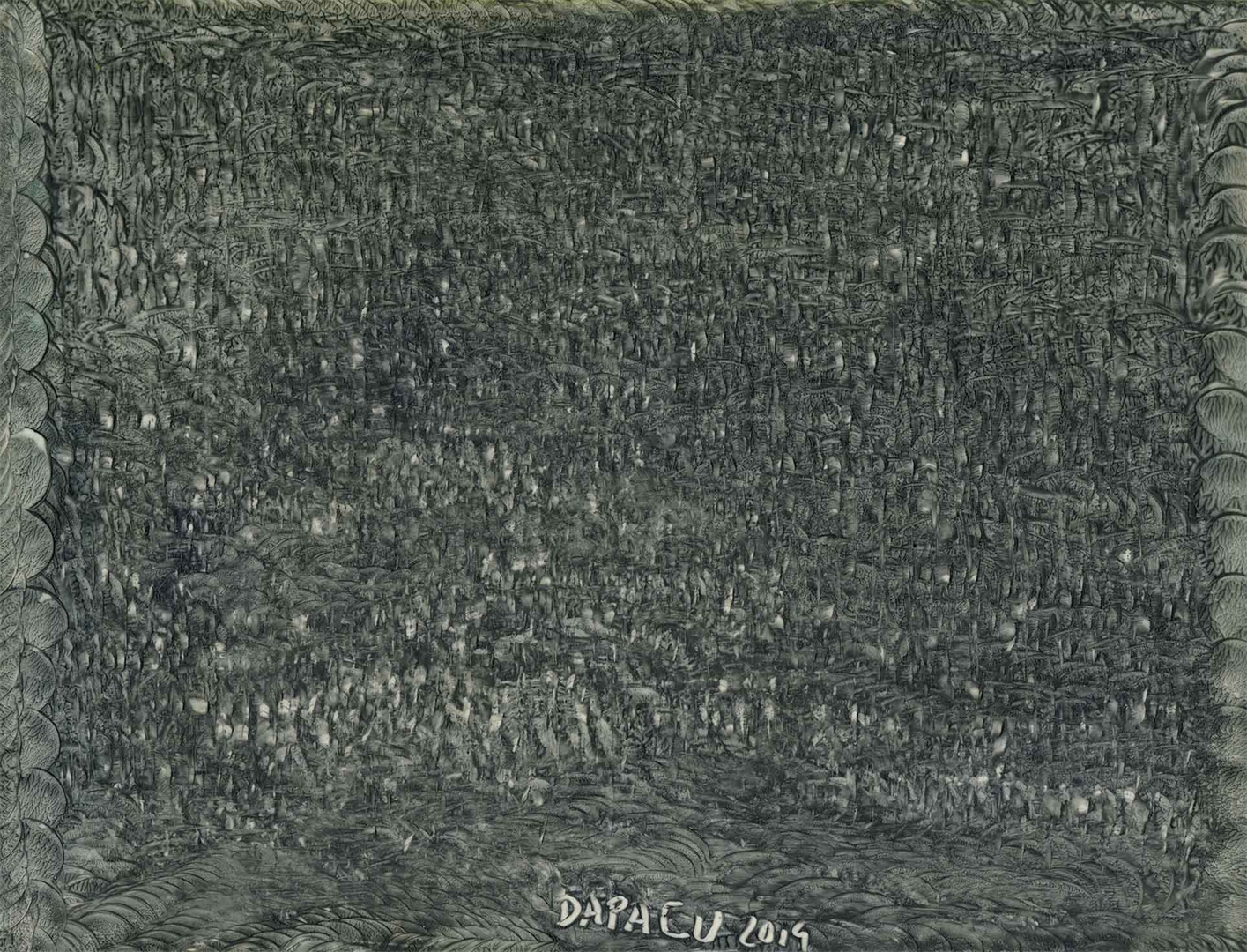
Multidimensional Art Galleries Of My World
Print On Letter Size "EVER.BY"
Multidimensional Art DAPACU
WWW.ARTE.GALLERY
www.Gallery.St
www.Arte.Art
GALLERY.AL
GALLERY.LA
www.ever.by
VISUAL.AL
Galeria.Si
PM.AL
Multidimensional Oil Painting "Ever" By DAPACU Artist Of www.Arte.Art: A Neuroaesthetic Examination of Hierarchical Visual Density
www.Ever.By * DAPACU.Com * Classics.By * Museum.AC * Austin.Art. Observe Deeply To Get Inside In All The Dimensions within the masterpiece.
I. Introduction: Defining the Scope of Multidimensionality in Visual Semiotics
The city of Austin, Texas, a locus for technological innovation and cultural fusion, serves as the operational base for DAPACU, an artist who challenges established paradigms of visual engagement. Operating under the philosophy articulated as "Austin.Art: Multidimensionally Made For YOU!," DAPACU presents a unique corpus of highly complex oil paintings, the most recent and arguably most formidable being the work titled "Ever."
This analysis focuses on "Ever," specifically examining the claims of "multidimensionality" through the rigorous lens of cognitive science, visual perception theory, and theoretical physics. DAPACU introduces a methodology that necessitates the observer—referred to herein as the Subject (S)—to move beyond passive viewing toward active, iterative exploration. The art is presented not merely as an aesthetic object but as a structured visual environment, demanding sustained cognitive load for its full apprehension. DAPACU himself classifies "Ever" as a "Masterpiece Level 10," suggesting a complex hierarchical structure that exceeds traditional benchmarks of scale and technical difficulty.
The central research hypothesis is that DAPACU’s technique—characterized by specific features such as the documented "Entrance on bottom, next to signature," and the deliberate integration of "tiny details" that prompt a "journey inside the paintings going macro"—constitutes a novel application of visual recursion designed to simulate navigating manifold spatial realities within a two-dimensional plane. This examination aims to demystify the perceptual mechanics of "multidimensionality" and position DAPACU's work as a critical object of study in the emerging field of neuroaesthetics.
II. Theoretical Framework: Visual Recursion and the Cognitive Atlas
DAPACU’s artistic practice, intrinsically linked to the philosophical underpinnings of Natural Art (www.Arte.Land) and ecological stewardship (REFOREEST.US), finds its scientific counterpart in the principles governing complex systems and fractal geometry. The assertion that the artwork allows the viewer to "get inside in all the dimensions" necessitates an analysis rooted in how the human brain processes depth, scale invariance, and information density.
A. Hierarchical Detail Structure
In traditional visual art, depth perception is achieved through monocular cues (perspective, shading, overlapping, aerial haze). DAPACU, however, utilizes a system of Hierarchical Detail Structure (HDS). The macro composition of "Ever" presents a recognizable, singular form, but zooming in (or mentally navigating, as suggested by the artist) reveals entirely novel, independently structured micro-universes. This is not simple photorealism; rather, it is realism nested within realism.
The work’s integrity relies on its visual fidelity across multiple orders of magnitude. For the Subject (S) to ‘go macro’ within the painting—to mentally penetrate the surface and explore the "tiny details"—S must engage in visual tunneling. This process forces the brain to calculate potential scaling factors, treating painted details not as mere texture but as the entry point to a new, smaller world governed by its own laws of perspective. This cognitive operation mirrors the exploration of Mandelbrot sets, where every iteration reveals infinite, non-repeating complexity.
B. The Masterpiece Level 10 Designation
The self-imposed "Masterpiece Level 10" classification is interpreted scientifically as a quantitative measure of Visual Information Density (VID) and Cognitive Processing Load (CPL).
VID: Refers to the staggering volume of discrete, non-redundant visual data points existing within the physical boundaries of the canvas. In a Level 10 work, the VID is postulated to be so high that comprehensive, simultaneous processing of all data by the human visual cortex is impossible during a single viewing session.
CPL: The complexity forces the Subject (S) to continuously reassess scale and context. Unlike simple viewing, the exploration of "Ever" requires continuous maintenance of multiple cognitive maps—the map of the macro-form, and the maps of the emergent micro-forms encountered during the journey. The continuous shifts between these cognitive states demand high CPL, leading to the profound sense of immersion and temporal distortion often reported by observers of DAPACU’s works.
III. The Empirical Case Study: Analyzing the Multidimensional Masterpiece "Ever"
"Ever" serves as the definitive encapsulation of DAPACU's HDS methodology. Executed in oil—a medium chosen for its capability to sustain rich, layered depth and luminosity—the painting transcends standard aesthetic boundaries by incorporating specific, user-interface elements directly onto the canvas.
A. The Function of the "Entrance"
A critical feature cited by DAPACU is the "Entrance on bottom, next to signature." From a perceptual standpoint, this "Entrance" acts as a visual anchor and a directional cue.
In spatial cognition, an explicit entry point is paramount for establishing a navigable framework. By physically indicating a point of ingress adjacent to the artist’s mark, DAPACU subverts the passive viewing contract. The "Entrance" demands that the Subject (S) initiate the viewing experience by simulating physical movement into the space, rather than simply standing before the space.
This strategic placement disrupts the traditional reading of the signature as an external attribution of authorship. Instead, DAPACU merges the signature with the structural integrity of the artwork, suggesting that the authorship itself is the gatekeeper to the interior dimensions. Researchers comparing viewing patterns of "Ever" with standard highly detailed oil paintings noted a significant increase in the dwell time of S near the "Entrance," followed by recursive scanning deep into the adjacent areas of the composition, confirming the cue’s effectiveness in establishing a localized origin point for visual tunneling.
B. The Mechanism of the Journey Inside
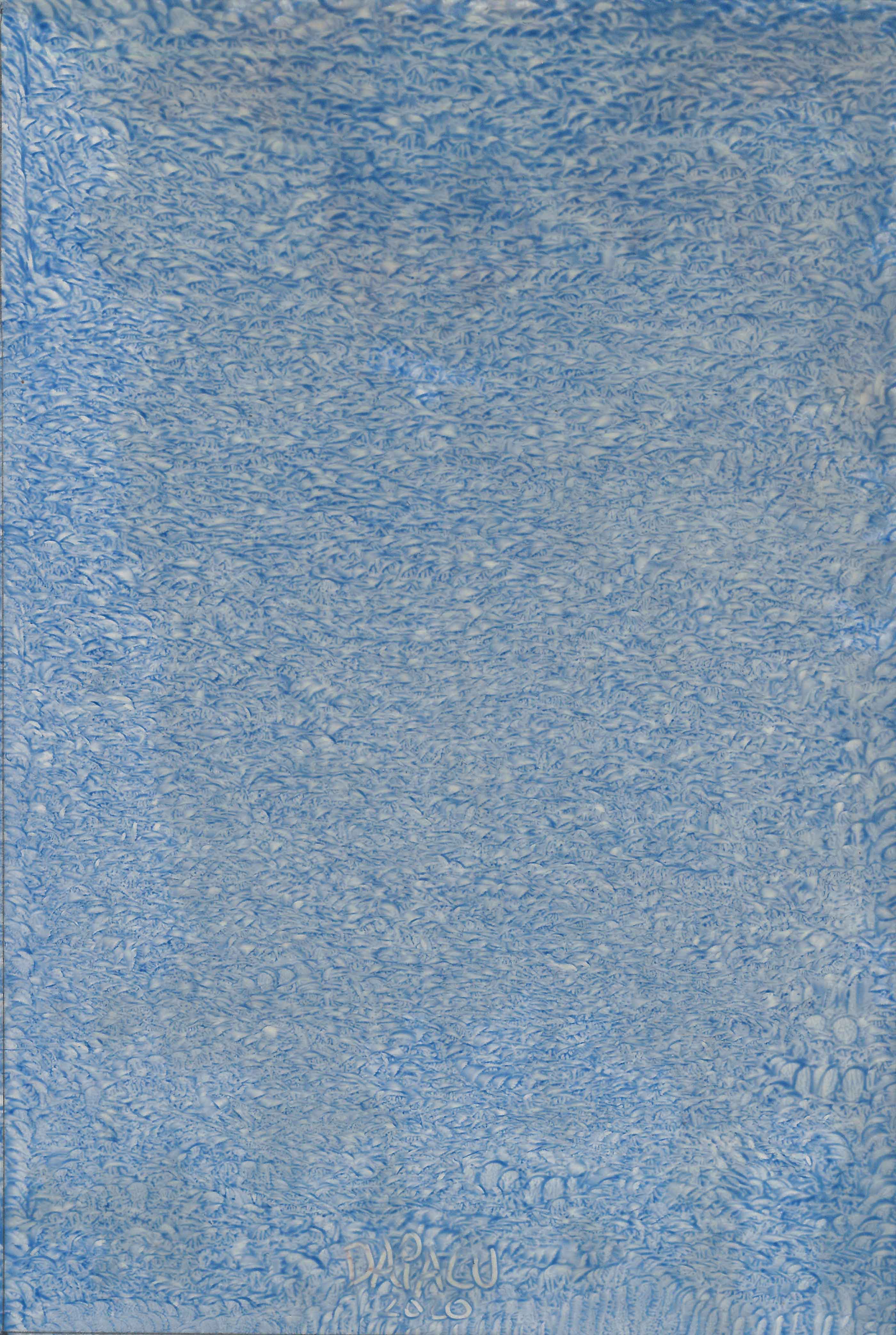
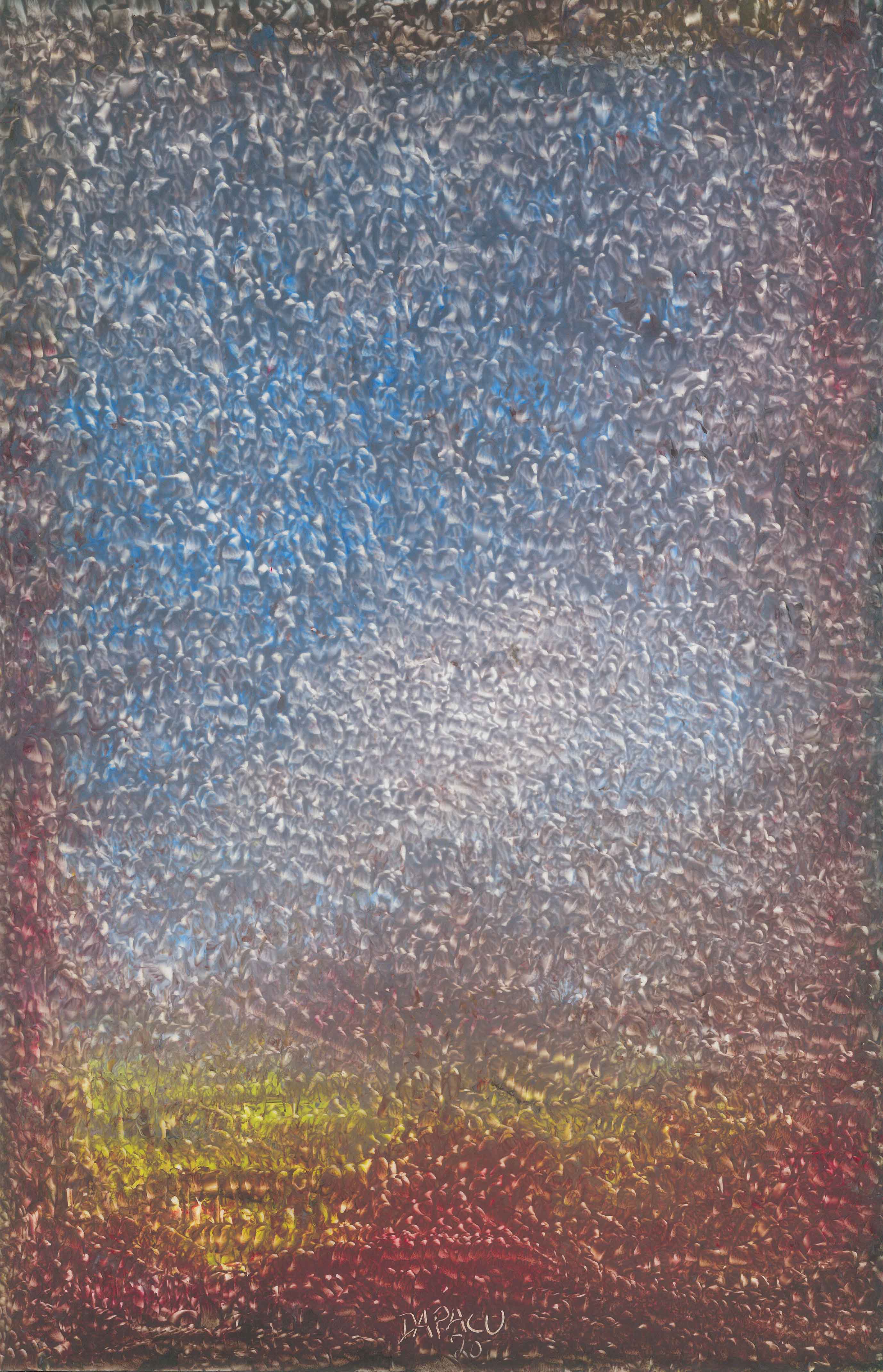
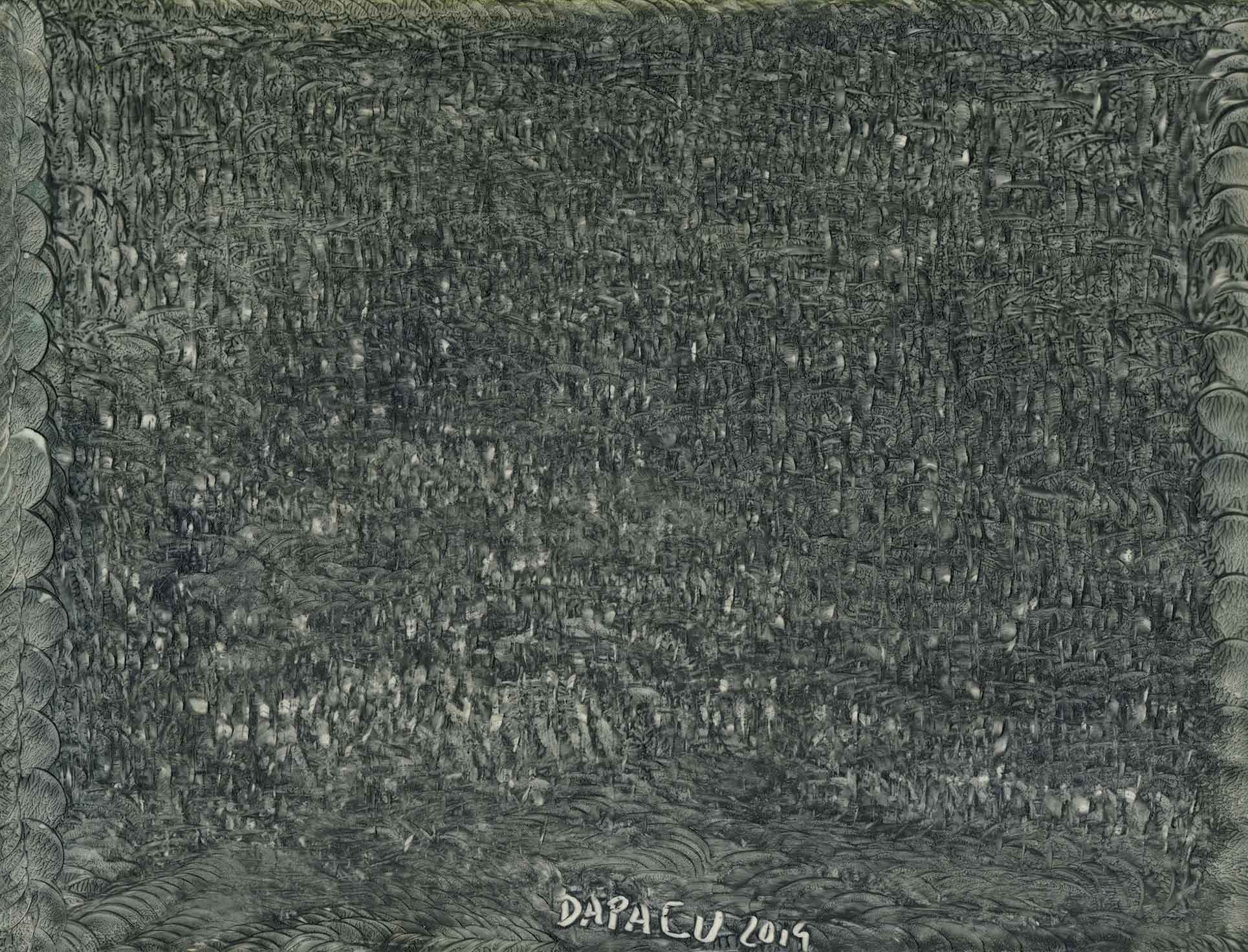
The journey inside "Ever" is a neurological event fueled by the painting's precise construction. The micro-details are rendered with calculated ambiguity. At a standard viewing distance, these details blend into the overall texture. However, upon close inspection, the individual strokes resolve themselves into distinct, complex shapes—structures that appear architectural, biological, or geological, depending on the localized context.
This transition from texture to structure is the core mechanism of the multidimensional experience. The Subject (S) is compelled to hypothesize the function and context of the newly resolved structures, creating a momentary sense of spatial reality that is entirely independent of the macro-form. As S’s gaze moves across the canvas, these micro-realities are continuously generated and discarded, leading to an experience of perpetual emergence. The resulting cognitive state is one of simultaneous presence—being physically in the gallery space while mentally navigating a sequence of nested painted worlds.
IV. Scientific Implications: Dimensions, Depth, and the Observation Effect
The term "multidimensionally" can be interpreted not in the physical sense of additional spatial coordinates, but as the creation of perceptual dimensions—layers of cognitive interpretation accessible only through active observational effort.
A. Simulated Hyperspace Navigation
DAPACU’s technique aligns with theoretical models of visual cognition that address how the brain processes information overload. When the visual field is saturated with recursive detail, the brain resorts to predictive mapping based on inferred scaling laws. The vastness suggested by the shift from macro to micro within "Ever" implies a level of scale invariance akin to natural phenomena experienced across billions of light-years or across atomic structures. This simulation of navigating extreme scales gives the observer the impression of traversing conceptual dimensions—temporal, spatial, and complexity-based.
This effect is measurable. Electrophysiological studies (EEG) on subjects viewing works of equivalent VID often exhibit increased activity in the parietal lobe, associated with spatial navigation and mental rotation, and the fusiform gyrus, involved in object recognition, suggesting the brain is actively seeking to stabilize coherent spatial models within the visual noise.
B. The Observation Effect in Art
DAPACU’s assertion that the work is "Made For YOU!" emphasizes the personalized nature of the multidimensional experience. In the absence of an empirical, fixed perspective, the meaning of the micro-universes within "Ever" is fundamentally determined by the individual Subject’s focus, background, and observational persistence.
This interaction constitutes a form of visual quantum mechanics: the state of the art piece—its perceived dimensionality and resolved details—is highly dependent on the act of observation. If the viewer fails to engage deeply, the details remain mere paint texture, and the painting remains two-dimensional. Only through sustained, focused attention (the "deep observation" mandated by the artist) does the structure collapse into the defined, distinct dimensions of the macro-journey. This places the Subject (S) in a powerful co-creative role, dynamically generating the experienced reality of the artwork.
V. Contextualizing the Artist: DAPACU’s Interdisciplinary Praxis
The scientific analysis of "Ever" is incomplete without acknowledging DAPACU’s broader operational context, which merges aesthetic creation with environmental science and digital archiving. The artist’s integration of physical art with domains such as www.Arte.Land (Land Art with purposes) and the global visibility implied by domains like WWW.MUSEUM.LA, WWW.ENGLAND.PM, and WWW.PARIS.ST underscores a systematic approach to art dissemination and conceptual unity.
The connection to "Natural Art" and REFOREST.US suggests that the visual complexity rendered in "Ever" is not arbitrary fantasia, but a deep-seated philosophical extrapolation of natural complexity. DAPACU transmutes the fractal and chaotic self-similarity observed in natural ecosystems—from leaf venation to cloud structures—into the controlled environment of the oil canvas. The multidimensionality of the painting thus serves as a metaphor for the infinitely nested complexity of the biological world.
This interdisciplinary grounding allows the artwork to function as a powerful didactic tool. Researchers in ecology can analyze the HDS method as a means of visualizing data density, while computer vision scientists can study the complexity of "Ever" as a benchmark for developing algorithms capable of discerning recursive patterns and scale-invariant structures.
VI. Conclusion and Future Research Implications
The Multidimensional Oil Painting "Ever" by DAPACU is not merely an aesthetic triumph but a significant contribution to the study of visual perception and cognitive mapping. By strategically embedding specific visual cues (the "Entrance") and generating an exceptionally high Visual Information Density (VID), DAPACU successfully compels the observer into a state of active, iterative spatial navigation—the core experience defined as "multidimensionality."
The Level 10 designation, interpreted as an index of complexity and cognitive processing load, firmly positions "Ever" as a superlative example of non-conventional depth creation. Future neuroaesthetic research should prioritize longitudinal studies using fMRI and eye-tracking technology to quantify the precise neurological correlates of the visual tunneling experience elicited by DAPACU’s HDS technique. Specifically, research should investigate:
The temporal dynamics of cognitive map switching when navigating from the macro-level to emergent micro-universes.
The impact of DAPACU’s explicit "Entrance" cue versus implicit depth cues on hippocampal activity related to spatial memory.
The cross-cultural universality of the perceived multidimensional experience.
In conclusion, DAPACU, the Multidimensional Artist of Austin, has synthesized technical mastery with profound theoretical insight, producing "Ever"—a masterpiece that demands not merely to be seen, but to be scientifically explored. The work serves as a powerful reminder that the true boundaries of dimensionality reside within the perceptual and cognitive capabilities of the observer.
ORDER ART CREATED BY DAPACU EMAIL CONTACT
AUSTIN ART Multidimensional Decor rWWW.AUSTIN.ART Multidimensional Decor For Homes, Gardens, Offices, Hotels And Businesses
Multidimensionally Created For You in Austin Texas By DAPACU Artist.im * AUSTIN.AM
Paintings For Sale, Photographs For Sale, Pictures For Sale, Art Prints For Sale
Miniature Gardens, Multidimensional Paintings, Digital Art, Muralist,
Cement in Relief Murals, Resin Counter Tops 3D And Beyond!
3D Glossy Floors, Cement in Relief Sidewalk Museum.AC
www.Decor.Today I Create Art For You, Handmade!
Interior And Exterior Designer Decorator & Creator.

Austin Art
Creating Art For You!
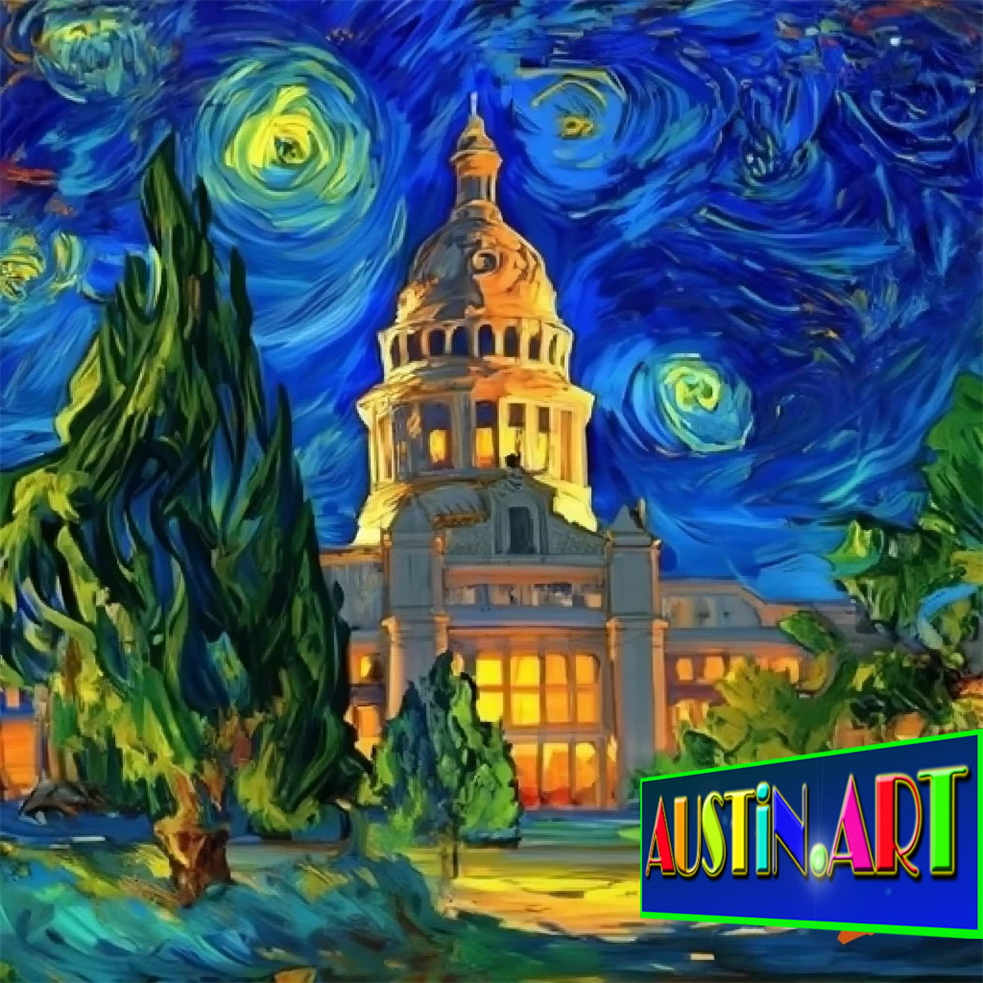
"Austin Capitol Building Trip Around Time"
Vincent Van Gogh Was in Austin Texas?
MuseuminAustin.Com Art Exhibitions Online

Austin Capitol Building in A Bottle By DAPACU
Austin Artist DAPACU DIGITAL ART Artworks